
A Proactive, FAM-Informed Approach to Troubleshooting, Testing, and Prevention
For individuals with Chronic Inflammatory Response Syndrome (CIRS), Mast Cell Activation Syndrome (MCAS), or other environmental sensitivities, the HVAC system can be an unseen enemy. This guide provides a step-by-step strategy to identify, understand, and address HVAC mold, empowering you to take control of your indoor environment and your health.
Section 1: Why Your HVAC Becomes a Mold Factory
Mold requires three simple things: moisture, a food source, and a dark, protected environment. Your HVAC system is a perfect incubator.
- Moisture: The cooling process naturally creates condensation on the coils and ductwork.
- Food Source: Your system continuously pulls in airborne organic material—dust, pet dander, and skin cells.
- Darkness & Temperature: The interior of your system is dark, protected, and kept at temperatures ideal for mold growth.
The New Construction & Excavation Threat
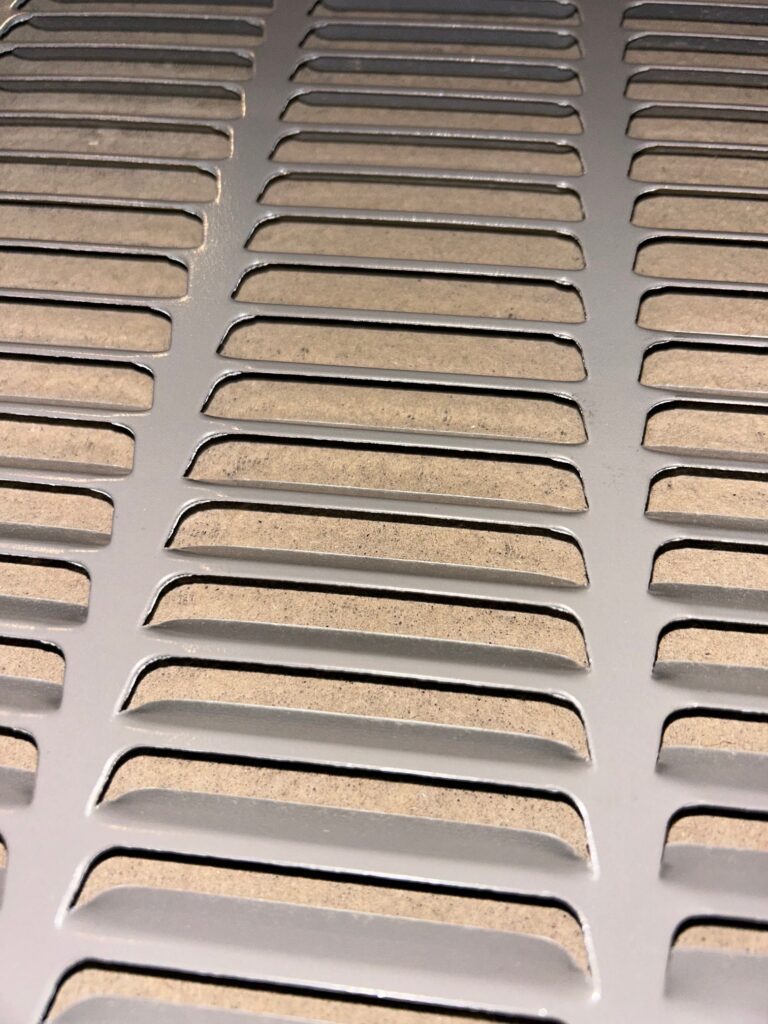
A primary catalyst for severe contamination is nearby construction. This releases massive amounts of fine dust and soil into the air, which is then pulled into your HVAC system. This debris clogs filters and vents, providing a super-charged buffet for mold.
http://googleusercontent.com/file_content/4 A return air vent showing its filter clogged with fine dust, likely from nearby construction. This is the primary “food source” being pulled into the system.
Section 2: Hotspots: Where Mold Hides in Your HVAC System
When troubleshooting, focus your attention on these key areas where moisture and debris collect.
- Evaporator Coils & Air Handler: This is the #1 hotspot. The coils are constantly wet during operation, and the surrounding plenum (the box your ducts connect to) can become covered in condensation.
- Ductwork: Condensation can form on and inside ductwork, especially in unconditioned spaces like basements or attics.
- Condensate Drain Pan: Located under the coils, any clog turns this pan into a stagnant pool, a prime breeding ground.
- Vents and Grilles: You may see visible spotting or discoloration on your supply vents.
http://googleusercontent.com/file_content/2 http://googleusercontent.com/file_content/3 Left: An overwhelmed HVAC plenum covered in condensation. Right: Condensation forming on metal ductwork. This pervasive moisture creates the ideal conditions for mold colonization.
Section 3: The Contamination Funnel: From Dust to Disease
A single issue, like a clogged filter, can set off a chain reaction that results in a whole-home contamination event. This can be visualized as a funnel:
1. TOP OF THE FUNNEL (The Root Cause)
- An external event occurs, such as nearby construction.
- Fine dust and organic debris are pulled into the system, overwhelming and clogging the air filter and return vents.
2. MIDDLE OF THE FUNNEL (System Compromise)
- The clogged filter reduces airflow across the evaporator coil, causing it to get too cold and produce excessive condensation.
- The abundant food source (dust) now has a constant source of water, creating a nutrient-rich sludge on the coils and in the drain pan.
3. NARROWING POINT (Microbial Growth)
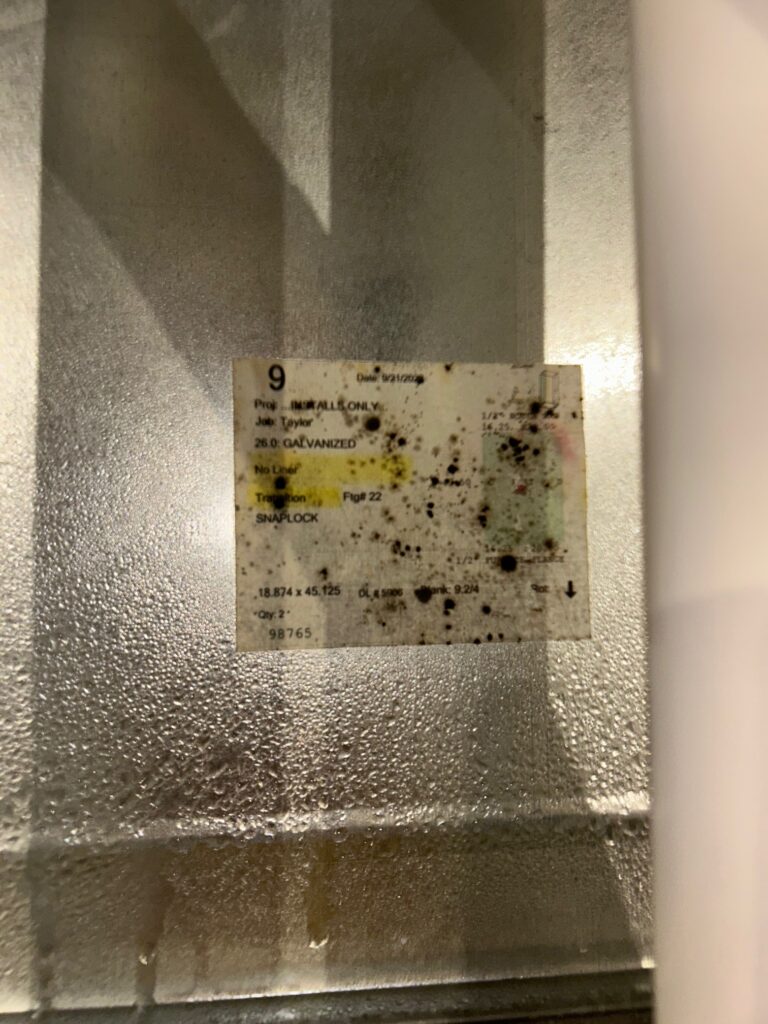
- With a perfect habitat created, common, hardy mold species begin to flourish. This is where you might see visible growth, even on unconventional surfaces like an HVAC sticker that provides paper and adhesive as food.
- Common species to emerge here: Aspergillus (especially A. niger and A. versicolor), Penicillium, Chaetomium.
4. BOTTOM OF THE FUNNEL (Whole-Home Exposure)
- The HVAC blower distributes the spores and mycotoxins from these colonies throughout the entire home via the supply vents, leading to inhalation and exposure in every room.
Section 4: The FAM-Sensitive Plate Method for HVAC Investigation
To confirm what’s at the bottom of your “funnel,” you must stress the system to see what it’s really distributing. The FAM method is designed for this.
- Procedure: Follow the FAM protocol (FAN ON, agitate return vent, place plates under supply vents for 1 hour).
- Goal: Capture the spores being actively pushed out by your system.
- Interpretation: Focus on the Dark Spore Priority. A high dark spore count on your vent plates compared to a control plate is a definitive sign of system contamination.
Section 5: Making the Ultimate Environment-to-Body Connection
Identifying mold in your HVAC is the first step. For sensitive individuals, the crucial next step is to prove if that specific mold is causing a reaction in your body.
Step 1: Identify Likely Mycotoxins from Your HVAC Molds Use your plate results and the list below to determine which mycotoxins your system may be producing.
| Common HVAC Mold | Associated Mycotoxins |
| Aspergillus niger | Ochratoxin A, Fumonisin |
| Aspergillus versicolor | Sterigmatocystin |
| Aspergillus fumigatus | Gliotoxin |
| Aspergillus ochraceus | Ochratoxin A |
| Penicillium chrysogenum | Roquefortine C, Meleagrin |
| Chaetomium globosum | Chaetoglobosins |
| Stachybotrys chartarum | Trichothecenes (Satratoxin G) |
Step 2: Cross-Reference with Antibody Testing The most direct way to connect your environment to your health is to compare the mycotoxins from your HVAC with your body’s immune response.
- Order a mycotoxin antibody test, such as the MyMycoLab Mycotoxin Antibody Panel. This test measures your body’s IgG and IgE antibody levels to specific mycotoxins.
- Find the Match: If your HVAC plates show high counts of Aspergillus niger and your MyMycoLab results show elevated IgG antibodies to Ochratoxin A, you have established a powerful, direct link. You now have evidence that your HVAC system is a likely source contributing to your body’s inflammatory burden.
This evidence-based connection is critical for motivating the proper remediation and for guiding a targeted detox protocol with your healthcare provider.
A Targeted Approach to Mycotoxin Detoxification
Mycotoxin illness can be a complex and frustrating journey, but advancements in testing are paving the way for more precise and effective healing protocols. Understanding your specific mycotoxin exposure is the critical first step, and antibody testing is proving to be a game-changer in providing this clarity.
The Power of Precision: IgG and IgE Antibody Testing
For years, urine testing has been the standard for detecting mycotoxins. While useful, these tests only provide a snapshot of what your body is currently excreting, which can fluctuate daily based on hydration, detox capacity, and recent exposures. This can lead to an incomplete picture of the total mycotoxin burden.
This is where Immunoglobulin G (IgG) and Immunoglobulin E (IgE) antibody testing offers a significant advantage. Instead of looking for the toxins themselves, these blood tests measure your body’s immune response to them.
- IgG antibodies indicate a past or ongoing exposure and represent the memory of your immune system.
- IgE antibodies can indicate an active allergic-type response to mold colonization in the body.
This method provides a more stable and accurate assessment of which specific mycotoxins are triggering an immune reaction in your body. By identifying the exact mycotoxins you are reacting to, you and your practitioner can create a highly targeted and efficient detoxification plan. This eliminates guesswork and ensures you are using the right tools for your specific needs from day one.